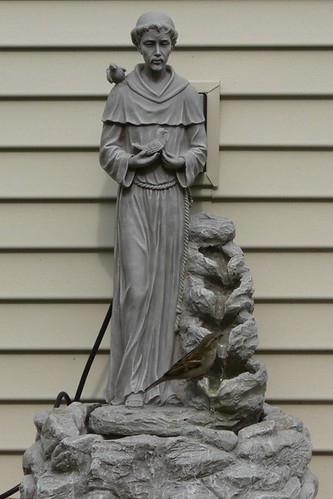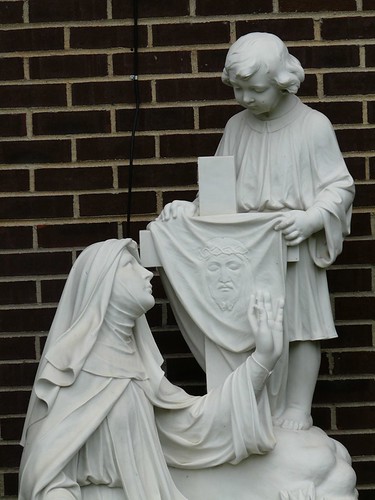
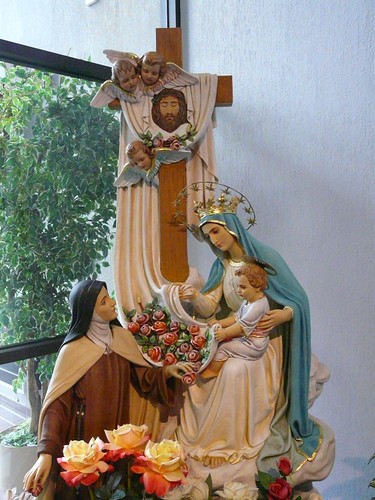
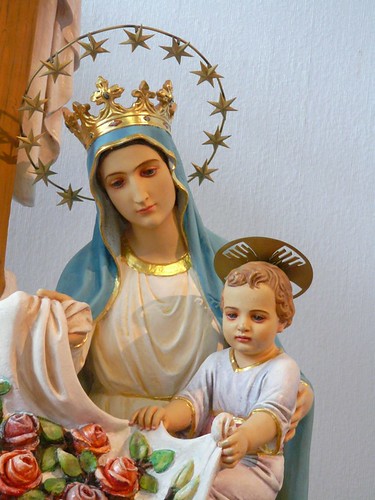
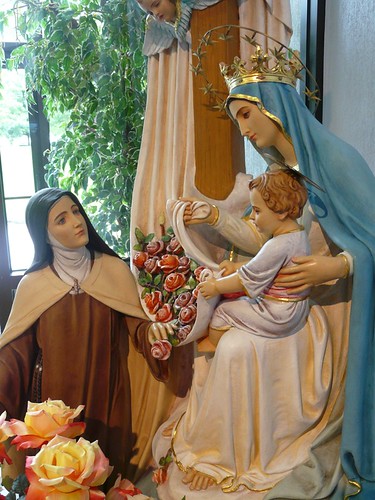
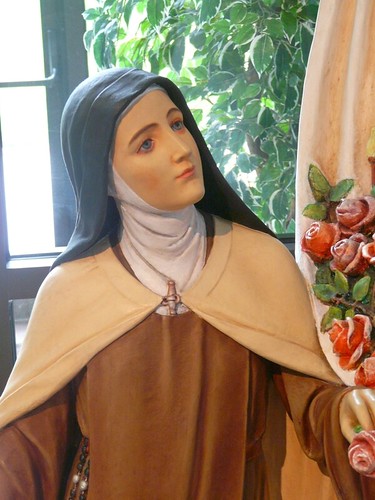
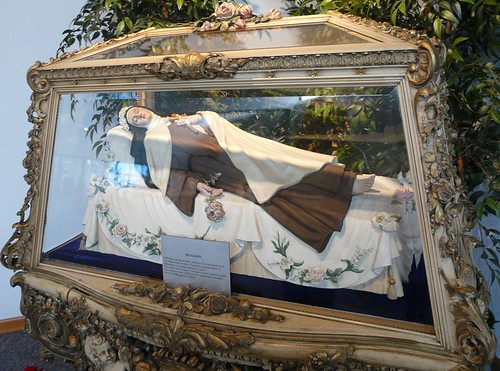
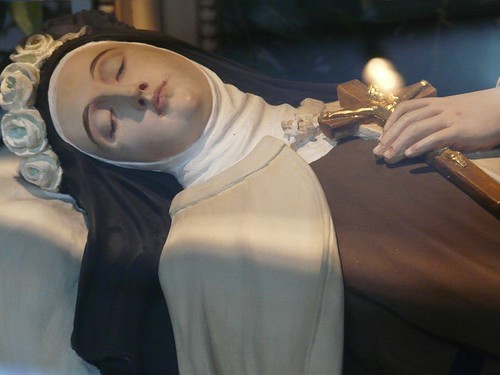
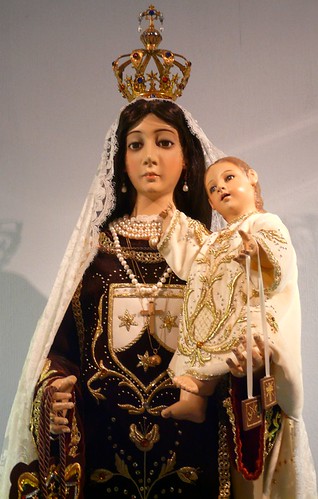
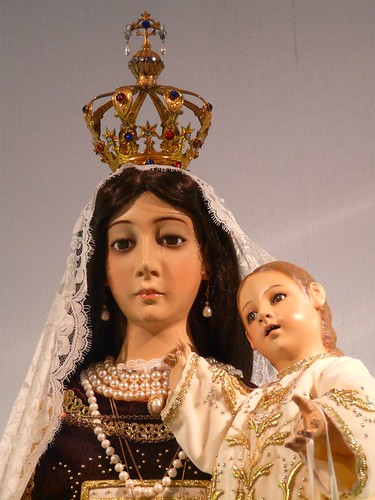
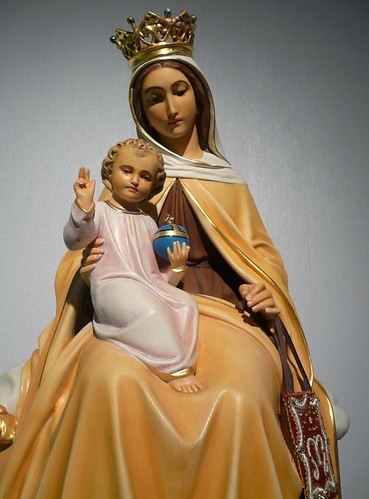
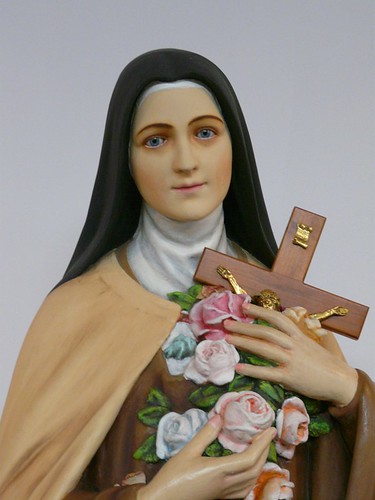
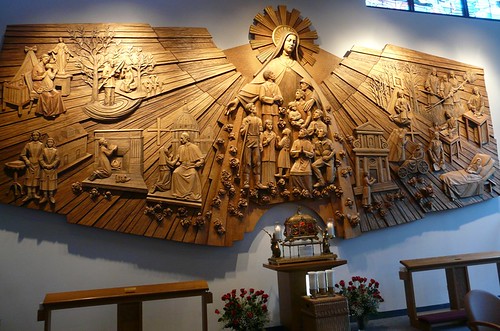

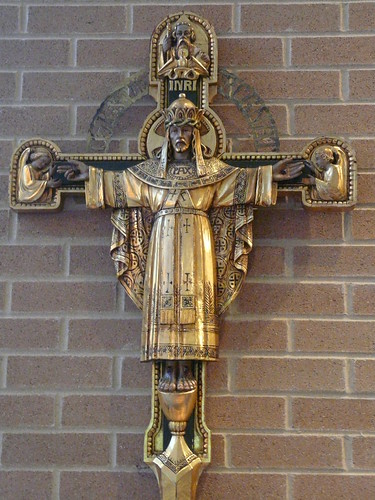

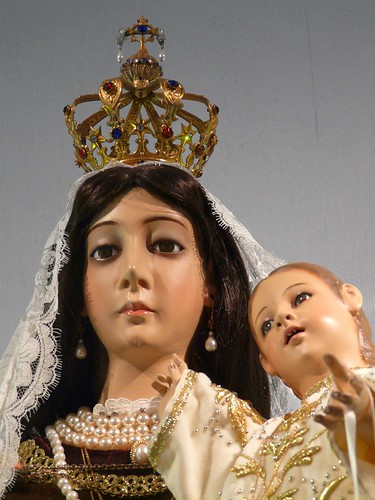
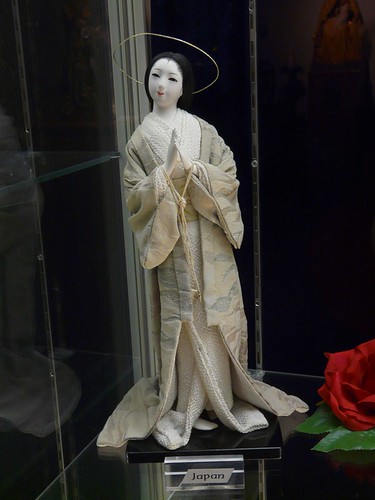
(My sister loves Japan stuff, but they had several cases full of different representations of Mary and Jesus from around the world)
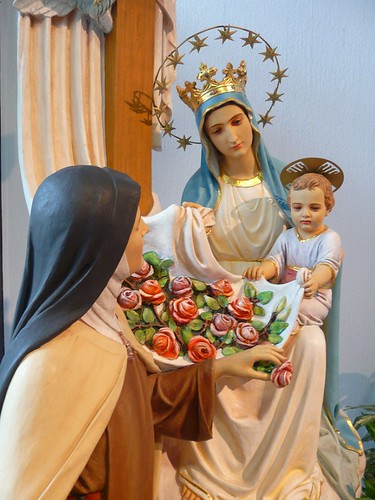


St. Jude Thaddaeus
Feastday: October 28
Patron of Desperate Cases
St. Jude, known as Thaddaeus, was a brother of St. James the Less, and a relative of Our Saviour. St. Jude was one of the 12 Apostles of Jesus.
Ancient writers tell us that he preached the Gospel in Judea, Samaria, Idumaea, Syria, Mesopotamia, and Lybia. According to Eusebius, he returned to Jerusalem in the year 62, and assisted at the election of his brother, St. Simeon, as Bishop of Jerusalem.
He is an author of an epistle (letter) to the Churches of the East, particularly the Jewish converts, directed against the heresies of the Simonians, Nicolaites, and Gnostics. This Apostle is said to have suffered martyrdom in Armenia, which was then subject to Persia. The final conversion of the Armenian nation to Christianity did not take place until the third century of our era.
Jude was the one who asked Jesus at the Last Supper why He would not manifest Himself to the whole world after His resurrection. Little else is known of his life. Legend claims that he visited Beirut and Edessa; possibly martyred with St. Simon in Persia.
Jude is invoked in desperate situations because his New Testament letter stresses that the faithful should persevere in the environment of harsh, difficult circumstances, just as their forefathers had done before them. Therefore, he is the patron saint of desperate cases and his feast day is October 28. Saint Jude is not the same person as Judas Iscariot who betrayed Our Lord and despaired because of his great sin and lack of trust in God's mercy.


Stay with me, Lord, for it is necessary to have You present so that I do not forget You. You know how easily I abandon You.
Stay with me, Lord, because I am weak and I need Your strength, that I may not fall so often.
Stay with me, Lord, for You are my life and without You I am without fervor.
Stay with me, Lord, for You are my light and without You I am in darkness.
Stay with me, Lord, to show me Your will.
Stay with me, Lord, so that I hear Your voice and follow You.
Stay with me, Lord, for I desire to love You very much and alway be in Your company.
Stay with me, Lord, if You wish me to be faithful to You.
Stay with me, Lord, as poor as my soul is I want it to be a place of consolation for You, a nest of Love.
Stay with me, Jesus, for it is getting late and the day is coming to a close and life passes, death, judgment and eternity approaches. It is necessary to renew my strength, so that I will not stop along the way and for that, I need You. It is getting late and death approaches, I fear the darkness, the temptations, the dryness, the cross, the sorrows. O how I need You, my Jesus, in this night of exile!
Stay with me tonight, Jesus, in life with all its dangers, I need You.
Let me recognize You as Your disciples did at the breaking of the bread, so that the Eucharistic Communion be the Light which disperses the darkness, the force which sustains me, the unique joy of my heart.
Stay with me, Lord, because at the hour of my death, I want to remain united to You, if not by Communion, at least by grace and love.
Stay with me, Lord, for it is You alone I look for, Your Love, Your Grace, Your Will, Your Heart, Your Spirit, because I love You and ask no other reward but to love You more and more.
With a firm love, I will love You with all my heart while on earth and continue to love You perfectly during all eternity. Amen.

American Minute with Bill Federer
September 5
Just five days after Princess Diana was killed, Mother Teresa died
SEPTEMBER 5, 1997.
The daughter of an Albanian grocer, she joined an order at age 18 and
began working in the slums of Calcutta.
Starting the Missionaries of Charity, which care for the blind, aged,
lepers, crippled, and dying, Mother Teresa stated:
"I see Jesus in every human being. I say to myself, this is hungry
Jesus, I must feed him. This is sick Jesus. This one has leprosy or
gangrene...I serve because I love Jesus."
A Nobel Prize recipient, 83-year-old Mother Teresa spoke to 3,000
attendees, including President and Mrs. Clinton and Vice-President Al
Gore at the National Prayer Breakfast, February 3, 1994:
"I feel that the greatest destroyer of peace today is abortion,
because it is a war against the child, a direct killing of the
innocent child, murder by the mother herself, and if we accept that a
mother can kill even her own child, how can we tell other people not
to kill one another?"
Mother Teresa continued:
"Please don't kill the child...give me the child. I am willing to
accept any child who would be aborted and to give that child to a
married couple who will love the child and be loved by the child."


Our Lady of Lourdes
by John O’Connell
On Thursday, February 11, 1858, a poor, sickly, unlettered peasant girl of Lourdes, France went with her sister and another girl to fetch sticks. Bernadette Soubirous, age 14, who knew little of her catechism but was devoted to the will of God, experienced her first apparition of a lovely Lady at the Grotto of Massabielle. Upon seeing the Lady, who had a rosary draped over her right arm, Bernadette began praying the Rosary. Bernadette did not know who the Lady was at this time. This is Bernadette’s description of the Lady at that first apparition:
While I was saying the Rosary, I was watching as hard as I could. She was wearing a white dress reaching down to her feet, of which only the toes appeared. The dress was gathered very high at the neck by a hem from which hung a white cord. A white veil covered her head and came down over her shoulders and arms almost to the bottom of her dress. On each foot I saw a yellow rose. The sash of the dress was blue, and hung down below her knees. The chain of the rosary was yellow; the beads white, big and widely spaced.
Thereafter commenced a series of apparitions of the Lady to Bernadette at the Grotto. Word soon spread about the apparitions and more and more people accompanied Bernadette to the Grotto, but only Bernadette could see the Lady. At these apparitions the Lady told Bernadette to “Pray to God for sinners!” Bernadette, as instructed by the Lady, also kissed the ground several times to do penance for sinners. At one of the apparitions Bernadette, following instructions of the Lady, scratched at the muddy earth and began to drink and wash from an unknown stream. Only later was the stream discovered to have miraculous healing powers.
The village Curé had asked Bernadette to inquire of the Lady who she was. On March 25, the feast of the Annunciation, also known as Lady Day, the Lady told Bernadette her name. She said, “I am the Immaculate Conception.” Only a few years ago the Holy Father, Pius IX, had declared ex cathedra as dogma of the Faith that the Blessed Virgin Mary had been conceived without the stain of original sin. This declaration of the Blessed Mother to Bernadette has deeply and profoundly moved many souls over the years, including St. Maximilian Kolbe. He was especially affected by the fact that Our Lady did not say that she was immaculately conceived but declared: “ I AM THE IMMACULATE CONCEPTION.” This is her name and suggests the profound mystery of the work of the Holy Spirit in the Virgin Mary’s soul.
Miracles still flow from the miraculous waters of Lourdes — but many more of the miracles occur during the blessing of the sick with the Most Holy Eucharist in the monstrance. This phenomenon underscores a profound truth of the spiritual life: Mary leads her children to her Divine Son, especially to His Eucharistic Heart.
The message of Our Lady of Lourdes is about the healing Mercy of God. But Lourdes is also about the need for prayer and penance. St. Bernadette testified to this call of Our Lady of Lourdes by living the rest of her life in humble prayer and suffering in a convent in France.
Millions of pilgrims venture every year to Lourdes. Some are miraculously healed. But many more are not healed of their affliction but receive the great and precious grace of lovingly embracing and carrying the cross Our Lord has given them. Our Lady of Lourdes, ora pro nobis.


St. John Bosco
(1815-1888)
John Bosco’s theory of education could well be used in today’s schools. It was a preventive system, rejecting corporal punishment and placing students in surroundings removed from the likelihood of committing sin. He advocated frequent reception of the sacraments of Penance and Holy Communion. He combined catechetical training and fatherly guidance, seeking to unite the spiritual life with one’s work, study and play.
Encouraged during his youth to become a priest so he could work with young boys, John was ordained in 1841. His service to young people started when he met a poor orphan and instructed him in preparation for receiving Holy Communion. He then gathered young apprentices and taught them catechism.
After serving as chaplain in a hospice for working girls, John opened the Oratory of St. Francis de Sales for boys. Several wealthy and powerful patrons contributed money, enabling him to provide two workshops for the boys, shoemaking and tailoring.
By 1856, the institution had grown to 150 boys and had added a printing press for publication of religious and catechetical pamphlets. His interest in vocational education and publishing justify him as patron of young apprentices and Catholic publishers.
John’s preaching fame spread and by 1850 he had trained his own helpers because of difficulties in retaining young priests. In 1854 he and his followers informally banded together under Francis de Sales.
With Pope Pius IX’s encouragement, John gathered 17 men and founded the Salesians in 1859. Their activity concentrated on education and mission work. Later, he organized a group of Salesian Sisters to assist girls.
On the whole surface of the sea you see an infinity of ships, all ending in a beak of sharp iron that pierces whatever it hits. Some of these ships have arms, cannons, guns; others have books and incendiary materials. All of them are thronging after a ship that is considerably bigger, trying to ram it, set fire to it, and do it every possible sort of damage. Imagine that in the middle of the sea you also see two very tall columns. On one is the statue of the Blessed Virgin Immaculate, with the inscription underneath: “Help of Christians.” On the other one, which is even bigger and taller, there is a Host of proportionately large size in relation to the column, and under it the words: “Salvation of believers.” From the base of the column hang many chains with anchors to which ships can be attached. The biggest ship is captained by the Pope, and all his efforts are bent to steer it in between those two columns. But, as I said, the other barks try in every way to block it and destroy it, some with arms, with the beaks of their prows, with fire from books and journals. But all their weapons are in vain. Every weapon and substance splinters and sinks. Now and then the cannons make a deep hole somewhere in the ship’s sides. But a breeze blowing from the two columns is enough to heal every wound and close up the holes. The ship again continues on its way. On the way the Pope falls once, then rises again, falls a second time and dies. As soon as he is dead, another immediately replaces him. He guides the ship to the two columns. Once there he attaches the ship with one anchor to the column with the consecrated Host, with another anchor to the column with the Immaculate Conception. Then total disorder breaks out over the whole surface of the sea. All the ships that so far had been battling the Pope’s ship scatter, flee, and collide with one another, some foundering and trying to sink the others. Those at a distance keep prudently back until the remains of all the demolished ships have sunk into the depths of the sea, and then they vigorously make their way to the side of the bigger ship. Having joined it, they too attach themselves to the anchors hanging from the two columns and remain there in perfect calm.

Unexpected Help
Although Don Bosco had no lack of resourcefulness, he often received much-needed help from an unexpected source.
Don Bosco entitled the last chapter of his Memoirs "A Mysterious Dog: Grigio." There he relates how a strange gray dog protected him from time to time. The dog came to be known as Grigio, from the Italian word for ‘gray.’ All sorts of attempts have been made to account for this animal, which always seemed to be present whenever Don Bosco needed protection but was subsequently nowhere to be found.
Those who saw it described it as a German shepherd standing about three feet high with a ferocious appearance. The first time Don Bosco’s mother set eyes on it, she cried out in alarm.
In those days the Valdocco was more isolated than it is now, and it was necessary to traverse a wide stretch of rough waste ground dotted with trees and bushes to reach the seminary. Since he had been physically attacked many times, Don Bosco was obliged to go out accompanied. One evening, however, he was returning home alone, and as he was making his way across this open area he began to feel afraid. Suddenly, a large dog bounded to his side, terrifying him even more.
"Yet its attitude was not threatening," Don Bosco writes. "It was rather like a dog that had recognized its master. We quickly became friends, and it accompanied me as far as the Oratory. That was not the only time that I encountered it. On different occasions it kept me company, sometimes providentially.
"Towards the end of November, 1854, on a sleety night I was returning from the town. In order not to be alone I took the road leading from the Consolata down to the Cottolengo Institute. At one point I noticed that two men were walking a short distance in front of me, matching their pace with mine. I crossed over to the other side to avoid them but they did the same. I then tried to turn back but it was too late. They suddenly wheeled around and were on me in two steps. Without a word they threw some kind of coat over me. I struggled in vain to break loose. One of them then tried to gag me with a scarf. I wanted to shout but I hadn’t the strength.
"At that moment Grigio appeared, growling like a bear; he hurled himself at the first man with his paws at his throat while snarling at the other. They had to let go of me to deal with the dog.
" ‘Call off your dog!’ they shouted, almost paralyzed with fear.
" ‘I’m going to,’ I replied, ‘but next time leave strangers alone.’
" ‘Call him off quickly!’ they shouted.
"Grigio went on barking. The two thugs took off as fast as they could, and Grigio accompanied me to the Cottolengo where I stopped to recover for a moment. Then I returned to the seminary, this time well protected. Every evening when I went out alone I always noticed Grigio on one side of the road."
One evening, Grigio flatly refused to allow Don Bosco to leave the house by lying across the doorway and growling whenever he tried to pass. "If you won’t listen to me, listen to the dog; it has more sense than you," remarked his mother. A quarter of an hour later a neighbor ran in to say that he had heard of a plot to assault Don Bosco that night.
When attempts to harm him ceased, the dog disappeared and was not seen again, save once. In 1883, Don Bosco arrived late one night to the station at Bordighera accompanied by one of his priests. Finding no one to show him the way, he wandered through the dark, stormy night trying to find the Salesian house. Suddenly, he was welcomed by a bark, as Grigio appeared and led him to the house.
"All sorts of stories have been told about this dog," remarks Don Bosco, "but I never discovered who its master was. I only know that throughout the many dangers I encountered, this animal protected me providentially."
In fact, Don Bosco never tried to discover whose dog it was. "What does it matter? What counts is that it was my friend."




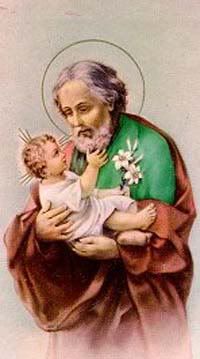
St. Joseph, Pray for Me
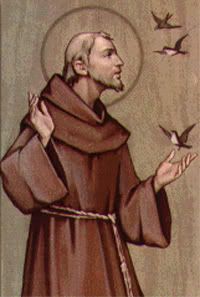
St. Francis, Pray for Me
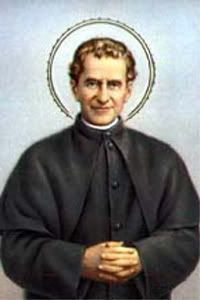
St. John Bosco, Pray for Me
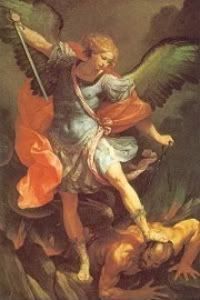
St. Michael the Archangel, Pray for Me
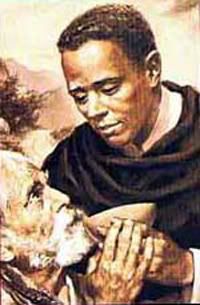
St. Martin de Porres, Pray for Me
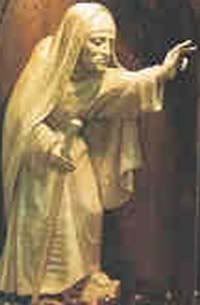
Blessed Margaret, Pray for Me
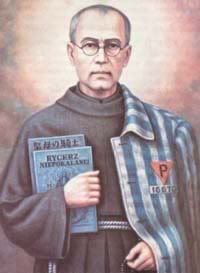
St. Maximilian Kolbe, Pray for Me
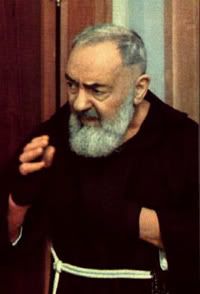
Padre Pio, Pray for Me
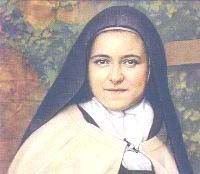
St. Therese, Pray for Me
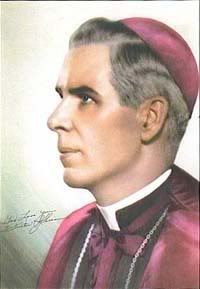
Archbishop Fulton Sheen, Pray for Me
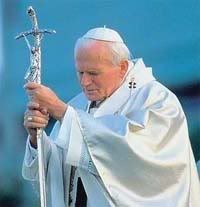
Pope John Paul II, Pray for Me
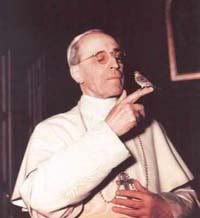
Pope Pius XII, Pray for Me