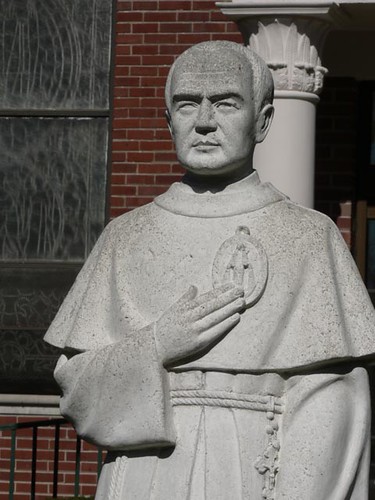
With the election drawing closer, and the growing possibility of a pro-abortion administration and congress, it seemed fitting that St. Jude's day would come now. As the patron of desperate causes, now seems to be the proper time to ask him to join us in prayer.
St. Jude, pray with us, that our nation will be responsible in electing those who will lead us, that all will recognize that the right to life is the most important issues, and that our elected officials will work together to build a culture of life, and protect the family. Amen.
Sancta Maria, Mater Dei, ora pro eo Sancta Maria, Mater Ecclesiæ, ora pro eo Sancta Maria, Salus populi Romani, ora pro eo Sancti Michael, Gabriel et Raphael, orate pro eo Omnes sancti Angeli, orate pro eo Sancte Ioseph, ora pro eo Sancte Ioannes Baptista, ora pro eo Omnes Sancti Patriarchæ et Prophetæ, orate pro eo Sancti Petre et Paule, orate pro eo Sancte Andrea, ora pro eo Sancti Ioannes et Iacobe, orate pro eo Sancte Thoma, ora pro eo Sancte Matthæe, ora pro eo Sancte Matthia, ora pro eo Sancte Luca, ora pro eo Sancte Marce, ora pro eo Omnes Sancti Apostoli et Evangelistæ, orate pro eo Sancte Barnaba, ora pro eo Sancta Maria Magdalena, ora pro eo Omnes Sancti Discipuli Domini, orate pro eo Sancte Clemens, ora pro eo Sancte Calliste, ora pro eo Sancte Fabiane, ora pro eo Sancte Corneli, ora pro eo Sancte Xyste, ora pro eo Sancte Ioannes, ora pro eo Sancte Martine, ora pro eo Sancte Damase, ora pro eo Sancte Leo Magne, ora pro eo Sancte Gregori Magne, ora pro eo Sancte Leo (None), ora pro eo Sancte Pie (Decime), ora pro eo Omnes Sancti Pontifices Romani, orate pro eo Sancte Stephane, ora pro eo Sancte Laurenti, ora pro eo Sancti Protomartyres Romani, orate pro eo Sancte Ignati Antiochene, ora pro eo Sancte Hippolyte, ora pro eo Sancti Iustine et Apolloni, orate pro eo Sancte Tharsici, ora pro eo Sancte Sebastiane, ora pro eo Sancte Maximiliane (Kolbe), ora pro eo Sanctæ Perpetua et Felicitas, orate pro eo Sancta Agnes, ora pro eo Sancta Cæcilia, ora pro eo Sancta Eugenia, ora pro eo Sancta Maria (Goretti), ora pro eo Omnes Sancti Martyres, orate pro eo Sancte Ambrosi, ora pro eo Sancte Hieronyme, ora pro eo Sancte Augustine, ora pro eo Sancte Athanasi, ora pro eo Sancti Basili et Gregori Nazianzene, orate pro eo Sancte Ioannes Chrysostome, ora pro eo Sancti Cyrille et Methodi, orate pro eo Sancte Carole (Borromeo), ora pro eo Sancti Benedicte et Bernarde, orate pro eo Sancti Francisce et Dominice, orate pro eo Sancte Ignati (de Loyola), ora pro eo Sancte Francisce (Xavier), ora pro eo Sancte Ioannes Maria (Vianney), ora pro eo Sancte Philippe (Neri), ora pro eo Sancte Gaspar (Del Bufalo), ora pro eo Sancte Vincenti (Pallotti), ora pro eo Sancta Sabina, ora pro eo Sancta Marcella, ora pro eo Sancta Paula, ora pro eo Sancta Francisca (Romana), ora pro eo Sancta Catharina (Senensis), ora pro eo Sancta Teresia a Iesu, ora pro eo Sancta Maria Faustina (Kowalska), ora pro eo Omnes Sancti et Sanctæ Dei, orate pro eo
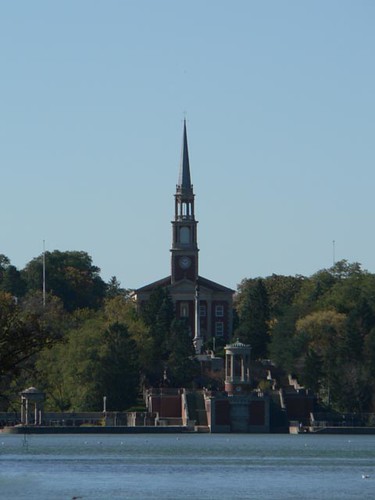
I took a ton of pictures last weekend. There is one of them that I actually want to show Ma Beck to see if she knows what building it is, but I don't have the picture with me, I'll have to grab it tonight when I get home.
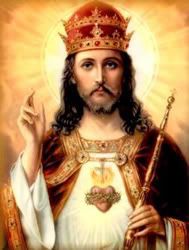
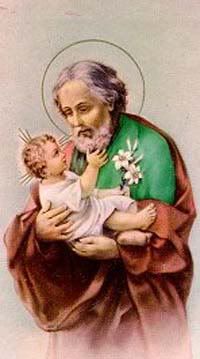
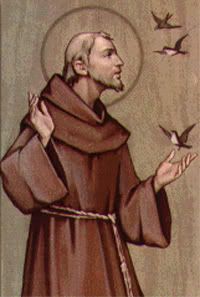
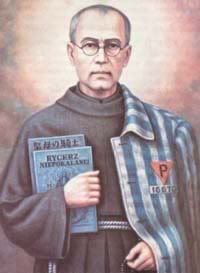
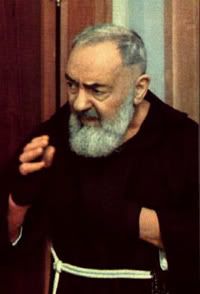
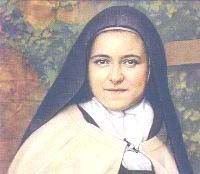
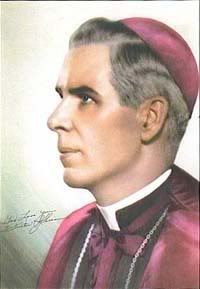
Esther did a neat little Saints Meme, and I can't let her have all the fun. The rules of the meme are as follows: you have to list 4 of your favorite saints, one blessed, and one person you think should be a saint.
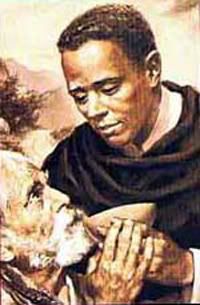
Martin de Porres
Also known as Martin of Charity; the Saint of the Broom (for his devotion to his work, no matter how menial)
The illegitimate son of a Spanish nobleman, Juan, and a young freed black slave, Anna Velasquez, Martin grew up in poverty. He spent part of his youth with a surgeon-barber from whom he learned some medicine and care of the sick.
At age 11 he became a servant in the Holy Rosary Dominican priory in Lima, Peru. Promoted to almoner, he begged more than $2,000 a week from the rich to support the poor and sick of Lima. Placed in charge of the Dominican's infirmary; known for his tender care of the sick and for his spectacular cures. His superiors dropped the stipulation that "no black person may be received to the holy habit or profession of our order" and Martin took vows as a Dominican brother in 1603.
Established an orphanage and children's hospital for the poor children of the slums. Set up a shelter for the stray cats and dogs and nursed them back to health. Lived in self-imposed austerity, never ate meat, fasted continuously, and spent much time in prayer and meditation with a great devotion to the Holy Eucharist. Friend of Saint John de Massias.
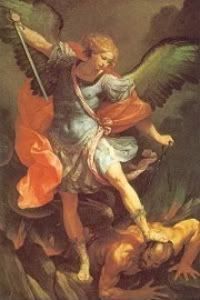
Archangel. Leader of the army of God during the Lucifer uprising. Devotion is common to Muslims, Christians and Jews with writings about him in all three cultures. Considered the guardian angel of Israel.
The feast of the Apparition of Saint Michael commemorates the 6th century appearance of the archangel on Mount Gargano near Manfredonia in southern Italy. Michael requested a church built in his honor at the site. If you find medals or holy cards with 'relics' of Michael, they are probably rock chips from the cave, or pieces of cloth that have touched it.
Born to a southern Italian farm family, the son of Grazio, a shepherd. At age 15 he entered the novitiate of the Capuchin friars in Morcone, and joined the order at age 19. Suffered several health problems, and at one point his family thought he had tuberculosis. Ordained at age 22 on 10 August 1910.
While praying before a cross, he received the stigmata on 20 September 1918, the first priest ever to be so blessed. As word spread, especially after American soldiers brought home stories of Padre Pio following WWII, the priest himself became a point of pilgrimage for both the pious and the curious. He would hear confessions by the hour, reportedly able to read the consciences of those who held back. Reportedly able to bilocate, levitate, and heal by touch. Founded the House for the Relief of Suffering in 1956, a hospital that serves 60,000 a year. In the 1920's he started a series of prayer groups that continue today with over 400,000 members worldwide.
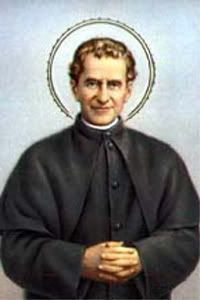
Son of Venerable Margaret Bosco. John's father died when the boy was 2 years old, and as soon as he was old enough to do odd jobs, he did so for extra money for his family. Bosco would go to circuses, fairs and carnivals, practice the tricks he saw magicians perform, and then present one-boy shows. After his performance, while he still had an audience of boys, he would repeat the homily he had heard earlier in church.
Worked as a tailor, baker, shoemaker, and carpenter while attending college and the seminary. Ordained in 1841. Teacher. Worked with youth, finding places where they could meet, play and pray, teaching catechism to orphans and apprentices. Chaplain in a hospice for girls. Wrote short treatises aimed at explaining the faith to children, and then taught children how to print them. Friend of Saint Joseph Cafasso, whose biography he wrote, and confessor to Blessed Joseph Allamano. Founded the Salesians of Don Bosco (SDB) in 1859, priests who work with and educate boys, under the protection of Our Lady, Help of Chistians, and Saint Francis de Sales. Founded the Daughters of Mary, Help of Christians in 1872, and Union of Cooperator Salesians in 1875.
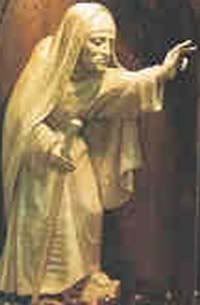
Born a blind, lame, deformed, hunchback midget. When she was six years old, her noble parents walled her up beside a chapel; she could not get out, but could attend Mass and receive the Sacraments. After 14 years of imprisonment, her parents took her to a shrine to pray for a cure. When none occurred, they abandoned her. She became a lay Dominican, and spent her life in prayer and charity. When she died, the townspeople thronged her funeral, and demanded she be buried in a tomb inside the church. The priest protested, but a crippled girl was miraculously cured at the funeral, and he consented.
Today is of course the feast of St. Nicholas, an obviously pretty popular saint. He's popular in my family for another reason however. My Great-Grandfather from my Mom's side came from Bari, Italy. Bari, is now the home of St. Nicholas, and he is sometimes known as St. Nicholas of Bari. There are a good number of those named Nicholas in my family for this reason. My Grandfather and Uncle are Nicholas, and my sister was Nicole, so you can see it is a popular name in the family. Another popular name is James, but I have no idea why it is so popular, and thats neither here nor there.
The family story I always heard about Bari and St. Nicholas was that the people of Bari went to Turkey where St. Nicholas was buried and stole him from the Orthodox as the Muslims were approaching (and we wonder why the Orthodox don't like us). From what I have read online this turns out to be pretty true.
On August 26, 1071 Romanus IV, Emperor of the Eastern Roman Empire (reigned 1068 - 1071) faced Sultan Alp Arslan of the Seljuk Turks (reigned 1059 - 1072) in the Battle of Manzikert. The battle ended in humiliating defeat and capture for Romanus. As a result the Empire temporarily lost control over most of Asia Minor to the invading Seljuk Turks. It would regain its control over Asia Minor during the reign of Alexius I Comnenus, (reigned 1081 - 1118). But early in his reign Myra was overtaken by the Islamic invaders. Taking advantage of the confusion, sailors from Bari, Italy seized the remains of the saint over the objections of the Orthodox monks. Returning to Bari, they brought the remains with them and cared for them.
All Christians, young and old, men and women, boys and girls, reverence his memory and call upon his protection. And his favors, which know no limit of time and continue from age to age, are poured out over all the earth; the Scythians know them, as do the Indians and the barbarians, the Africans as well as the Italians." When Myra and its great shrine finally passed into the hands of the Saracens, several Italian cities saw this as an opportunity to acquire the relics of St. Nicholas for themselves. There was great competition for them between Venice and Bari. The last-named won, the relics were carried off under the noses of the lawful Greek custodians and their Mohammedan masters, and on May 9, 1087 were safety landed at Bari, a not inappropriate home seeing that Apulia in those days still had large Greek colonies. A new church was built to shelter them and the pope, Bd. Urban II, was present at their enshrining. Devotion to St. Nicholas was known in the West long before his relics were brought to Italy, but this happening naturally greatly increased his veneration among the people, and miracles were as freely attributed to his intercession in Europe as they had been in Asia.
(2) Disembarking, then, at Myra, these privileged mariners, after approaching the sacred and holy grave of the Blessed, and after bowing down with great humility, as was meet, they made an act of reverence. Then, after they found monks watching beside the holy grave of the Blessed, they requested them to make known to them where the saint's body lay. The monks, thinking that they had made the request in order to reverence the body, with sincerity and kindheartedness complied with their desire and showed them the place where the body of the holy prelate was. The monks afterwards questioned them somewhat sharply "Why you men, do you make such a request? You haven't planned to carry off the remains of the holy saint from here? You don't intend to remove it to your own region ? If that is your purpose, then let it be clearly known to you that you parley with unyielding men, even if it mean our death. For we have rid ourselves of all fear. We won't allow this to be done, we are not going to take after the Iscariot who became a traitor to his own Saviour and Master. Away with any such thoughts! But in truth how can we be unthinking traitors to our own guardian, to our protector, our champion, our intercessor? How can we show ourselves as not submissive, but disobedient servants of our benefactor, our patron and our father?"
...
After saying this to the monks, when they saw that these persisted the more in grief and tears and regarded their words as of no account, they forced their way into the miraculous tomb. The watchers seeing this unexpected turn of events and overcome with fear and trembling, rent their garments and pulled at their hair and bears, bewailing their misfortune piteously, and made as if to inform the citizens of the happening. And when the men of Bari perceived-this, they put guards at the entrances and exits of the holy church and, overpowering the monks, took counsel how they could open the holy tomb of the Blessed.
So that is how the St. Nicholas, Bishop of Myra ended up in Italy. In my family we always sort of imagine some relative far in the past being among those absconding with the relics. Although, I'm not sure if that would be a good thing or not...
(Here are some pictures online that I found of his Basilica)
At this time last year I started the 2006 Saint for the Year Devotion along with someone that I found through the Internet. Over the course of the past year, I have had 474 individual requests for a special saint for the year. This is amazing! And starting today I will be taking names of anyone that wants to take part in this devotion for the year 2007.
Catholic and politically conservative, I graduated with a BA in History (concentration in American) and Political Science. I'm between two parishes; one in Wisconsin that is fairly traditional, and one in Illinois that is fairly liberal. I teach CCD. I work in the food service industry, which basically means I'm working in fast food until I find a better job. I'd like to work for the church somehow. Right now I'm working on getting my teaching certification, although I'm unsure thats the correct path for me.
This blog is as random as I am. I hope you enjoy.
I love You, O my God, and my only desire is to love You until the last breath of my life. I love You, O my infinitely lovable God, and I would rather die loving You, than live without loving You. I love You, Lord and the only grace I ask is to love You eternally....My God, if my tongue cannot say in every moment that I love You, I want my heart to repeat it to You as often as I draw breath.
- Saint John Vianney